Key takeaways
- Ask who controls the credentials and who can restore access.
- Hosted and self-custody models move risk rather than remove it.
- Understand recovery and failure plans before relying on any custody arrangement.
Custody is about control and responsibility
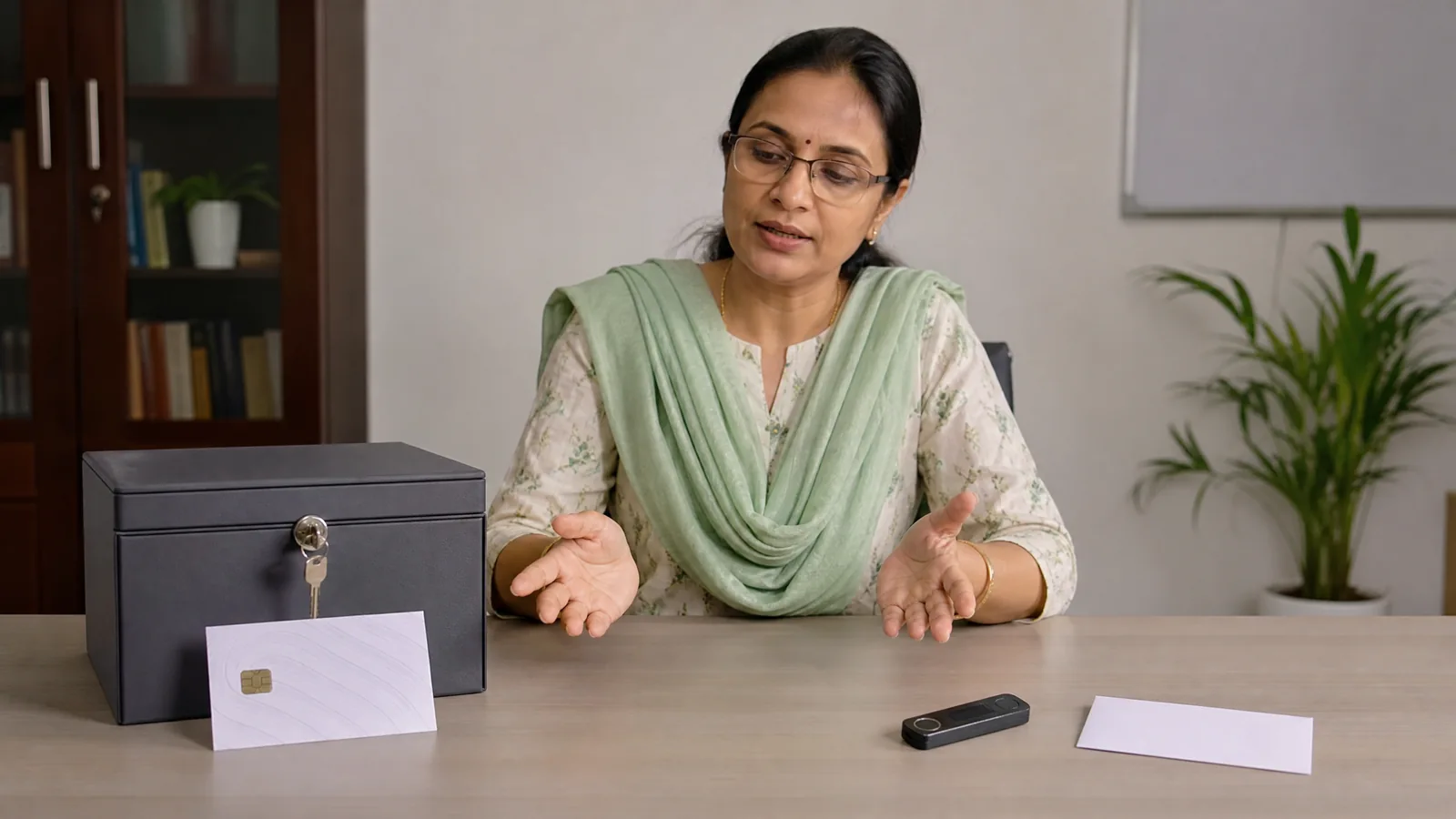
Custody describes who controls the credentials needed to move an asset. In a hosted account, a service provider commonly manages those credentials. In self-custody, the user typically controls them directly.
The interface alone may not make this distinction obvious, so readers should ask who can restore access and who can approve a transfer.
Hosted accounts introduce provider risk
A hosted service may offer account recovery and familiar controls, but access depends on the provider's systems, policies and continued operation.
Readers should understand withdrawal conditions, identity checks, complaint handling and what records remain available if access changes.
Self-custody introduces operational risk
Self-custody reduces dependence on one account provider but makes recovery and transaction verification the user's responsibility. A lost recovery phrase or mistaken transfer may be irreversible.
Practise the workflow with care and understand the device, backup and inheritance plan before relying on it.
Compare failure modes, not marketing claims
Neither model eliminates risk. Compare who holds the key, how recovery works, what evidence exists, how support is accessed and what happens when a device or organisation fails.
This comparison is educational and does not recommend a provider, product or custody model.
SOURCE, REVIEW & REVISION
How this guide is maintained
Reviewed by Editorial Standards Desk on 9 Sept 2026. Reviewer titles identify an internal source-review scope and do not imply individual professional advice or invented credentials.
Revision 1: Initial reviewed publication edition.
External source records are preserved in a private provenance ledger. Public citations and reading paths stay within FinanceIndos, while status words, dates and measurement limits remain visible in the article.